What does the law say about the sled dogs’ living conditions?
Are you wondering what is legal and what isn’t? What does the Finnish law say about the treatment of sled dogs and their living conditions? We gathered the legislation concerning sled dogs on one page.
The legislation concerning dogs will be revised in the near future. SEY is working towards improving the recognition of sled dogs in the legislation.
The legal excerpts below are unofficial translations from the Finnish legislation.
According to the law:
An animal must be treated well and with respect
Animals must be treated well and with respect. No undue pain or suffering must be caused to them, and their welfare must not be unnecessarily compromised. (EHL 6 §)
The animal must be treated calmly. The animal’s handling and training must aim to make use of its species-typical behaviour. The animal must be accustomed to handling and housing conditions if this is appropriate for the species and the type of animal being kept. If the animal is not accustomed to handling, this must be taken into account when handling the animal. (EHL 12 §)
The animal shall not be handled or trained in a rough manner or otherwise in a manner that causes it unnecessary pain or suffering. The animal shall not be tied up in a manner that causes it undue pain or suffering. The animal shall not be overworked or subjected to unreasonably harsh discipline. The animal’s level of competence and performance shall be taken into account in the training and use of the animal. The animal shall not be forced to attempt to exceed its natural abilities or strengths. (EHL 13 §)
Undue harm must not be inflicted on an animal. The use of a dog or other animal in official activities for tasks related to the animal’s intended use, which, due to the nature of the task, involves a risk of harm to the animal, is not considered to be harming an animal unnecessarily. (EHL 13 §) If an animal under direct supervision of a person or is within reach, the well-being of the animal and its holding area and the equipment must be inspected at least once a day, and more frequently if necessary. When assessing the sufficient frequency of inspections, the type of animal management, the species of animal, the physiological state of the animal, and the conditions in the animal’s holding area and habitat must be taken into account. (EHL 22 §)
A sick animal must be helped
A sick, injured or otherwise helpless domestic animal or other animal in human care must either be helped by yourself or be reported to its owner or keeper or to a supervisory authority. (EHL7 §)
Pain relief must be used in connection with painful procedures, unless the pain caused by the procedure is mild and momentary or if the procedure does not tolerate delay. (EHL 16 §)
The instruments, equipment and materials intended for the care and handling of animals must be suitable for their purpose and must not cause unnecessary pain, suffering or risk of injury to the animal. Animals must not be given substances that are hazardous to animal welfare, unless the animal is subject to veterinary treatment, euthanasia or treatment separately permitted elsewhere in the legislation. (EHL 17 §)
An operator who, in the course of their business, manufactures, imports, transports, transports through Finland, markets, sells or otherwise supplies or supplies equipment, equipment and materials for the treatment and handling of animals, as required by the circumstances, must ensure that the instruments, equipment and materials comply with the requirements of this act and pursuant to it. (EHl 17 §)
In the event of illness or injury, the animal in care shall be given, without delay, appropriate treatment or appropriate treatment obtained for it; it shall be given adequate rest; it shall be placed in an appropriate space separate from other animals, where appropriate, and shall be provided with veterinary care. In the care of a sick or injured animal, the aim must be to safeguard the animal’s functional capacity and quality of life. The animal must be euthanised if the nature of the disease or injury so requires. (EHL 23 §)
Animal care
Animals must be cared for in such a way that they have the opportunity to fulfil their essential behavioural needs related to movement, play, rest, body care, eating, foraging, exploring the environment and social relationships. (EHL 20 §)
The general well-being and cleanliness of the animal in care must be taken care of alongside cleanliness and other necessary physical care it might need. Appropriate measures must also be taken to prevent diseases and harm to the animals in care. (EHL 20 §)
If animals are kept in a group, the composition of the group must take into account the social relationships, age, sex and size of the animals. If animals are hostile to each other or may harm each other for any other reason, they must be kept separate from each other or have the opportunity to escape and hide from other animals. When groups of animals are combined and new animals are introduced, special attention must be paid to the problems that may arise from the reformation of social relations. (EHL 20 §)
The need for exercise of the animal in care must be satisfied. The animal must have the opportunity for adequate rest. (EHL 20 §)
The feeding and watering of animals under care must take into account the animal’s physiological needs and ensure that the animal receives an appropriate amount of good quality food and water or other drinkable material. The composition and method of food and drink must be in accordance with the animal’s physiological needs and essential behavioural needs. (EHL 21 §)
Feeding and watering
Constant access to water must be available for mammals and birds in their permanent housing. However, continuously available water is not required for e.g. reindeer when clean snow is available without restrictions or for sled dogs when exceptionally difficult weather conditions prevent the continuous availability of unfrozen water. (EHL 21 §)
However, continuously available water is not required in permanent enclosures for dogs kept in professional sled dog farms when the water freezes due to weather conditions. In this case, the dog must be offered water at least three times a day. However, nursing mothers and unweaned puppies must always have access to water in their permanent enclosure. Containers, equipment and instruments intended for feeding and watering the animal must be kept clean. In addition, care must be taken to ensure that urine and faeces do not contaminate the food or drinking water. (Government Decree on the Protection of Dogs, Cats and Other Small-Sized Companion and Recreational Animals, 7 §)
Animal habitats
The animal at the holding place must be able to stand and rest in a natural position and to change position without difficulty. Animals kept at the same holding place must have the possibility of simultaneous rest. At the holding place it must be possible to maintain sufficient cleanliness and hygiene for the wellbeing of the animal. It must be possible to inspect and care for the animal at the holding place without difficulty. (EHL 33 §)
An animal may be kept in a box or cage intended for its transport or in another similar small-sized storage facility only if the transport of the animal, illness or other temporary and acceptable reason so requires. (EHL 33 §)
The materials, structures and other characteristics of the place where the animal is kept must be such that the risk of injury and illness, the risk of escape and the risk of fire on the premises is as low as possible. (EHL 34 §)
An animal kept outdoors must have sufficient protection against adverse weather conditions or it must be possible to take the animal indoors if necessary. There must be no continuous noise in the holding place that disturbs or causes harm to the animal. (EHL 35 §)
The animal holding place must be kept sufficiently clean so that the animal’s well-being is not endangered. (EHL 36) The premises and equipment necessary for the inspection and handling of animals must be available in or in connection with a permanent holding place and, when necessary, facilities for the care and isolation of sick and injured animals. (EHL 38 §)
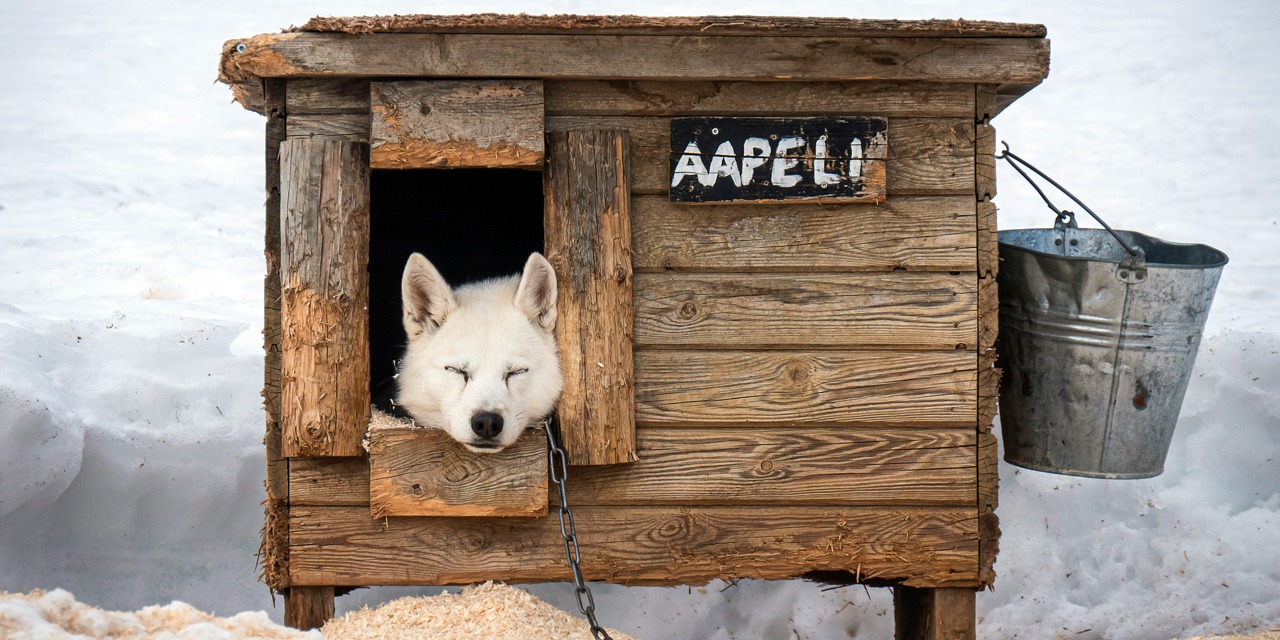
Dogs may only be kept outdoors tied up, in the immediate vicinity of an inhabited building, other than temporarily. A dog under one year of age may only be kept tied up outside temporarily. Dogs kept outdoors other than temporarily, and dogs kept in dog shelters must have access to an appropriate kennel or other appropriate shelter where they have sufficient protection against weather conditions. The size of the kennel must take into account the breed, size and number of dogs or dogs. A dog that is kept outdoors tied up in one place other than temporarily must have at least 40 square metres of space to move. The dog’s switch must not be able to twist around a tree, post or other similar obstacle. The collar of a dog that is kept outdoors in one place, other than temporarily, must be sufficiently wide and adjustable in circumference. The collar must not be metallic or strangulating. Dogs must not be kept on a leash indoors except for an acceptable reason, temporarily and for a short period of time. (Government Decree, section 10) (VN asetus 10 §)
The dog kennel or other similar shelter must be suitable for the dog in terms of size, structure and equipment. The walls, ceiling and floor must be airtight and, if necessary, thermally insulated. The bottom must be off the ground. The temperature and air quality must be suitable for the dog. The passage must be such that there is no risk of injury to the dog. If necessary, the access opening must be equipped with a suitable flap. The floor must be kept clean and dry. The dog must have a sleeping pad at its disposal. (Government Decree, section 12) (VN 12 §))
Animal euthanasia
killing. The animal must be stunned if a method is used for killing that does not immediately lead to the death of the animal. The method of stunning must be such that the animal’s remains unconscious until its death. (EHL 64 §)
An animal may only be killed by a person who has sufficient knowledge of the killing method and killing technique of the animal species in question and sufficient skill to perform the procedure. (EHL 64 §)
The person killing the animal shall ensure that the animal has died before its destruction or other measures are taken. (EHL 64 §)
A reindeer or an animal in care must not be killed by hunting methods. However, the reindeer herder may shoot the reindeer by hunting methods. In addition, an animal in care may be shot by hunting methods if there is a necessary and acceptable reason for doing so. (EHL 64 §) In an emergency, to prevent the animal from suffering any longer and if it is not possible to use the killing methods referred to in section 64, subsection 1, or if the animal cannot be caught, it may also be killed in another way, provided that it does not cause unnecessary suffering to the animal.
Do you work with animal tourism and suspect that your working conditions are not in order?
The occupational safety and health authority offers free telephone advice.